- Published
- Updated
Major Crops in India: Rice, Wheat, Cotton, Sugarcane & More
Explore the diverse world of Indian agriculture. Learn about major food crops like rice and wheat, cash crops like cotton and sugarcane, regional distribution, government initiatives, and the challenges & opportunities facing Indian farmers.
Major Crops in India
India, often referred to as the 'Land of Agriculture,' boasts an incredible diversity of crops that sustain millions of livelihoods and fuel the economy. Let's dive into the fascinating world of Indian agriculture to uncover the crops that make it thrive. To understand when and how these crops are grown, pair this with our guide on cropping patterns and seasons in India.
Here are some of the major crops grown in India:
Food Crops
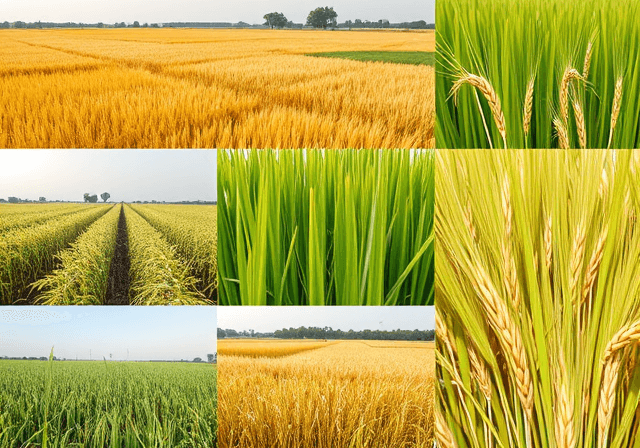
- Rice: Rice is the most widely grown crop in India, accounting for over 40% of the country's total cropped area. It is grown in the eastern and southern regions of the country, particularly in West Bengal, Andhra Pradesh, and Tamil Nadu.
- Wheat: Wheat is the second most widely grown crop in India, accounting for over 20% of the country's total cropped area. It is grown in the northern regions of the country, particularly in Punjab, Haryana, and Uttar Pradesh.
- Pulses: Pulses are an important source of protein in India and are grown in many parts of the country. The main pulses grown in India are gram, lentil, and chickpea.
- Maize: Maize is a versatile crop grown in many parts of India, particularly in the eastern and southern regions. It is used as a food crop, animal feed, and for industrial purposes.
Cash Crops
- Cotton: Cotton is a major cash crop grown in India, particularly in the western and southern regions. It is used for textile production and is a major export earner for the country.
- Jute: Jute is another important cash crop grown in India, particularly in the eastern regions. It is used for packaging and other industrial purposes.
- Sugarcane: Sugarcane is a major cash crop grown in India, particularly in the western and southern regions. It is used for sugar production and is a major export earner for the country.
Other Crops
- Tea: Tea is grown in the eastern regions of India, particularly in Assam and West Bengal.
- Coffee: Coffee is grown in the southern regions of India, particularly in Karnataka and Tamil Nadu.
- Rubber: Rubber is grown in the southern regions of India, particularly in Kerala and Tamil Nadu.
Classification of Crops in India
Crops in India are commonly grouped by their economic use — a classification worth knowing for exams:
| Category | Meaning | Examples |
|---|---|---|
| Food Crops | Grown mainly for human consumption. | Rice, wheat, maize, pulses, millets |
| Cash / Commercial Crops | Grown mainly for sale and raw material, often for industry or export. | Cotton, sugarcane, jute, tobacco, oilseeds |
| Plantation Crops | Grown on large estates over long periods, usually for export. | Tea, coffee, rubber, spices |
| Horticultural Crops | Fruits, vegetables and flowers (India is the world's 2nd-largest producer of fruits and vegetables). | Mango, banana, potato, onion, tomato |
Characteristics of Major Crops
Here's a table summarizing the characteristics of major crops:
| Crop | Climate | Soil | Water Needs |
|---|---|---|---|
| Rice | Hot and Humid | Well-drained | High |
| Wheat | Cool and Dry | Well-drained | Moderate |
| Pulses | Mild | Well-drained | Moderate |
| Maize | Warm and Humid | Well-drained | High |
- Rice: Rice is a tropical crop that requires a hot and humid climate. It is grown in well-drained soils and requires a lot of water.
- Wheat: Wheat is a temperate crop that requires a cool and dry climate. It is grown in well-drained soils and requires a moderate amount of water.
- Pulses: Pulses are a cool-season crop that requires a mild climate. They are grown in well-drained soils and require a moderate amount of water.
- Maize: Maize is a warm-season crop that requires a hot and humid climate. It is grown in well-drained soils and requires a lot of water.
Regional Distribution of Major Crops
India's diverse agro-climatic zones allow for the cultivation of various crops in specific regions. Here’s a closer look at the regional distribution of major crops:
Eastern Region (Rice):
The eastern region, including states like West Bengal, Odisha, and Bihar, is the largest producer of rice. West Bengal alone contributes over 13% of India’s total rice production, making it the top rice-producing state.
Source: Directorate of Economics and Statistics, Ministry of AgricultureNorthern Region (Wheat):
The northern region, particularly Punjab, Haryana, and Uttar Pradesh, leads in wheat production. Punjab and Haryana together account for over 40% of India’s total wheat production.
Source: Indian Council of Agricultural Research (ICAR)Southern Region (Coffee):
The southern states of Karnataka, Kerala, and Tamil Nadu dominate coffee production. Karnataka alone contributes about 70% of the country’s coffee output.
Source: Coffee Board of IndiaWestern Region (Cotton):
States like Gujarat, Maharashtra, and Rajasthan are the leading cotton producers. Gujarat is the top producer, accounting for nearly 30% of India’s total cotton production.
Source: Cotton Corporation of India
Government Initiatives and Policies
- National Agriculture Policy: The National Agriculture Policy aims to promote agricultural growth, improve crop yields, and enhance the livelihoods of farmers.
- Soil Health Card Scheme: The Soil Health Card Scheme aims to provide soil health cards to farmers, which will help them to improve soil fertility and reduce the use of chemical fertilizers.
- Pradhan Mantri Fasal Bima Yojana: The Pradhan Mantri Fasal Bima Yojana aims to provide crop insurance to farmers, which will help them to reduce the risk of crop failure and improve their livelihoods.
Challenges and Opportunities
Challenges
- Climate Change: Climate change is a major challenge facing Indian agriculture, as it is affecting crop yields and affecting the livelihoods of farmers.
- Soil Degradation: Soil degradation is another major challenge facing Indian agriculture, as it is affecting soil fertility and affecting crop yields.
- Water Scarcity: Water scarcity is a major challenge facing Indian agriculture, as it is affecting crop yields and affecting the livelihoods of farmers.
Opportunities
- Sustainable Agriculture: Sustainable agriculture is an opportunity for Indian agriculture, as it can help to improve crop yields, reduce the use of chemical fertilizers, and enhance the livelihoods of farmers.
- Organic Farming: Organic farming is an opportunity for Indian agriculture, as it can help to improve soil fertility, reduce the use of chemical fertilizers, and enhance the livelihoods of farmers.
- Value Addition: Value addition is an opportunity for Indian agriculture, as it can help to improve the income of farmers and enhance the livelihoods of farmers.
Quiz Time!
What is the most widely grown crop in India?
a) Rice
b) Wheat
c) Pulses
d) MaizeWhich region of India is the largest producer of rice?
a) Eastern Region
b) Northern Region
c) Southern Region
d) Western RegionWhat is the main objective of the National Agriculture Policy?
a) To promote agricultural growth
b) To improve crop yields
c) To enhance the livelihoods of farmers
d) All of the above
Answers: 1 – a) Rice (India's most widely grown crop and staple food) · 2 – a) Eastern Region (West Bengal is the top rice-producing state) · 3 – d) All of the above
Frequently Asked Questions (FAQ)
Frequently Asked Questions (FAQs)
+What is the difference between food crops and cash crops?
Food crops are grown primarily to feed people — cereals like rice and wheat, pulses and millets that form the staple diet. Cash (or commercial) crops are grown mainly for sale and to earn income, often supplying industry or export markets — examples include cotton, sugarcane, jute and oilseeds. Many cash crops are the raw material for agro-based industries such as textiles and sugar.
+Which is the most widely grown crop in India, and which states lead in rice and wheat?
Rice is India's most widely grown crop and its staple food. Rice production is led by the eastern states, with West Bengal the single largest producer, followed by states like Uttar Pradesh and Punjab. Wheat is concentrated in the northern plains, where Uttar Pradesh, Punjab and Haryana are the leading producers — Punjab and Haryana together being the backbone of the Green Revolution.
+What are plantation crops?
Plantation crops are grown on large estates over long durations and are usually cultivated for commercial sale and export. In India the main plantation crops are tea (Assam and West Bengal), coffee (Karnataka, Kerala, Tamil Nadu) and rubber (Kerala and Tamil Nadu), along with spices. They are labour-intensive and often located in hilly, high-rainfall regions of the north-east and the south.
Recommended Books
You can explore these highly recommended resources for a deeper understanding.
Indian Economy: Performance and Policies - by Uma Kapila
Skill Development and Employment in India - by Subramanian Swamy
Related Articles: